Auckland’s commuter rail network is fully electric, modern, and one of the most useful tools for tourists exploring the city. Four lines radiate from Britomart Train Station in the lower CBD — connecting Newmarket, Mt Eden, Manukau, Henderson and the wider Auckland suburbs. The 2026 City Rail Link opening adds two new underground stations and doubles the network’s capacity. This complete Auckland trains guide covers the four lines, the major stations, fares with the AT HOP card, City Rail Link impact, and the best train rides for sightseeing in the city.
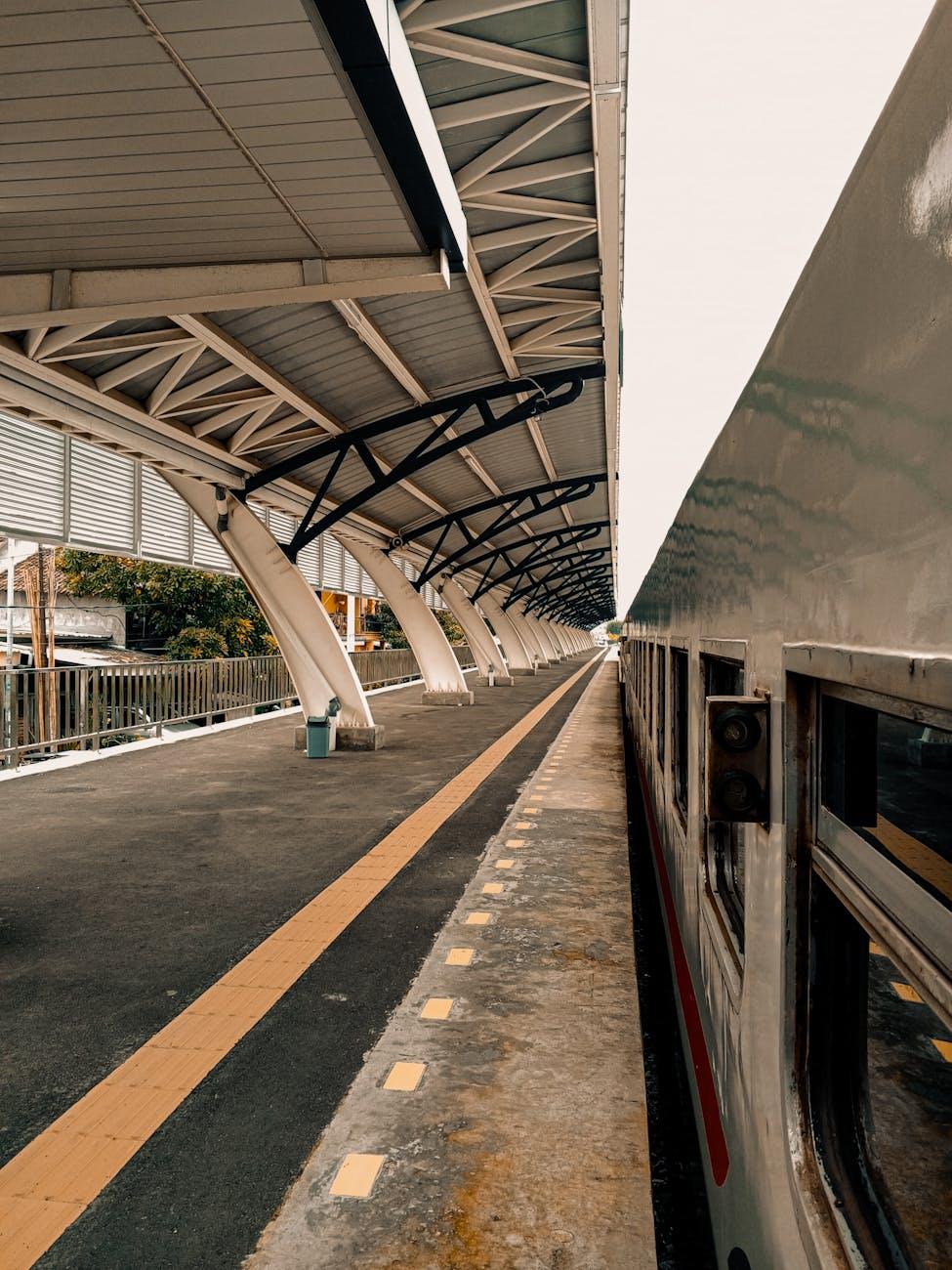
Auckland trains at a glance
- Operator: Auckland Transport (AT)
- Lines: 4 — Western, Southern, Eastern, Onehunga
- Hub station: Britomart Train Station (lower CBD)
- Hours: 5:00am–11:00pm (later Friday/Saturday); reduced Sunday
- Frequency: 10-15 minutes peak; 20-30 minutes off-peak
- Fares: NZ$2.20 (1 zone HOP) to NZ$7.10 (5+ zones); contactless +20%
- Daily fare cap: NZ$20
- Weekly fare cap: NZ$50
- Payment: AT HOP card (best value), contactless card, Apple Pay, Google Pay
- Rolling stock: all electric (since 2015)
- Length: ~94 km of track across four lines
- City Rail Link: opens late 2026 with new Aotea and Karangahape stations
Auckland’s four train lines

Western Line — Britomart to Swanson
The Western Line runs from Britomart through the inner-west suburbs to Henderson and Swanson. Tourist-relevant stations:
- Britomart — the hub station; integrated with the cruise terminal and Britomart shopping precinct.
- Newmarket — 8 minutes from Britomart; connects to Westfield Newmarket shopping; transfer hub for the Onehunga and Western lines.
- Grafton — 12 minutes from Britomart; closest to Auckland War Memorial Museum (15-min walk).
- Mt Eden — 18 minutes from Britomart; 10-min walk to Mt Eden volcano summit.
- Kingsland — 22 minutes from Britomart; closest station to Eden Park Stadium.
- Mt Albert — 28 minutes from Britomart; 10-min walk to MOTAT and Auckland Zoo.
- Henderson — 35 minutes; West Auckland mall and city.
- Swanson — 50 minutes; gateway to the Waitākere Ranges.
Southern Line — Britomart to Pukekohe
The Southern Line runs from Britomart through Newmarket, the inner-southern suburbs, to South Auckland and beyond to Pukekohe. Tourist-relevant stations:
- Britomart — hub.
- Newmarket — 8 minutes; major transfer station.
- Greenlane — 12 minutes; closest to Greenlane Hospital and Cornwall Park.
- Ellerslie — 14 minutes; suburban Auckland with horse racing at Ellerslie Racecourse.
- Penrose — 17 minutes; transfer to the Onehunga Line.
- Manurewa — 35 minutes; South Auckland.
- Papakura — 50 minutes; outer south.
- Pukekohe — 1 hour; the Southern Line’s southern terminus.
Eastern Line — Britomart to Manukau
The Eastern Line runs from Britomart eastward through Sylvia Park to Manukau. Useful for shopping mall access and South Auckland exploration:
- Britomart — hub.
- Glen Innes — 18 minutes; suburban Eastern Auckland.
- Panmure — 22 minutes; bus interchange to North Shore.
- Sylvia Park — 25 minutes; integrated station with NZ’s largest shopping mall.
- Otahuhu — 30 minutes; major bus interchange.
- Manukau — 35 minutes; the Eastern Line’s southern terminus; close to Manukau City and the Lantern Festival venue.
Onehunga Line — Britomart to Onehunga
The Onehunga Line is the smallest of the four — Britomart to Onehunga via Newmarket and Penrose. Useful for Onehunga Bay and Cornwall Park access:
- Britomart — hub.
- Newmarket — 8 minutes; transfer station.
- Greenlane — 12 minutes; Cornwall Park access.
- Penrose — 17 minutes; transfer to the Eastern Line.
- Te Papapa — 22 minutes.
- Onehunga — 25 minutes; gateway to Onehunga Bay; transfer to Manukau Harbour ferries.
Britomart Train Station

Britomart Train Station is the central hub for Auckland’s rail network. All four lines arrive and depart from Britomart’s underground platforms. The station is integrated with:
- Britomart Pavilion (the heritage 1910 train station building above)
- Britomart Bus Terminus (major bus interchange)
- Britomart shopping precinct (NZ designer flagships)
- Commercial Bay shopping mall
- The cruise ship terminal at Princes Wharf (5-min walk)
- Sky Tower (10-min walk)
- Auckland CBD core (immediate walking access)
Britomart is the country’s most-used train station — 27 million passengers per year. Trains arrive every 10-15 minutes during peak hours; 20-30 minutes off-peak. The station has multiple ticket machines, AT HOP card top-up locations, customer service desk, free wifi, and accessible facilities including lifts to all platforms.
City Rail Link — opening late 2026
The City Rail Link (CRL) is Auckland’s largest infrastructure project ever — a 3.5 km underground rail tunnel through the CBD with two new stations, doubling rail capacity through the city centre. Scheduled to open in late 2026, the CRL will dramatically improve Auckland’s rail network for both commuters and tourists.
New stations
- Aotea Station — at Aotea Square in the CBD; will become Auckland’s busiest train station, serving the central CBD, Queen Street, Aotea Centre, and the Town Hall.
- Karangahape Station — at the K Road end of the CBD; serves the creative precinct, Karangahape Road bars, restaurants, and the southern CBD.
Network impact
The CRL converts the rail network from a “dead-end at Britomart” arrangement to a through-running network. Trains will pass through the CBD rather than terminating, doubling capacity and shortening journey times. Mt Eden, Karangahape, Aotea and Britomart all become accessible without changing trains. The Western Line in particular will benefit dramatically — direct trains to the central CBD without the current Newmarket reversal.
Construction has caused intermittent disruptions on Albert Street and the wider CBD since 2018. Check current status at AT.govt.nz before riding through Britomart during construction-final phases.
Auckland’s train history
Auckland’s first passenger train ran in 1873, making the city’s rail network one of the oldest in the Southern Hemisphere. Through the 20th century the network grew to cover most of the city’s southern and western suburbs but suffered chronic underfunding. By the 1990s the system was running diesel trains on poorly maintained tracks. The 2003 opening of Britomart Train Station was the first major modernisation in 40 years; the 2008-2014 electrification project converted the network from diesel to electric and dramatically improved frequency. The 2026 City Rail Link opening represents the biggest single investment in the network’s history — a NZ$5 billion project that will transform Auckland’s rail system from a peripheral commuter network into a true urban metro.
Auckland train fares (2026)
Auckland trains use a zone-based fare system across 9 fare zones. The price depends on how many zones you cross, not how long you travel.
- 1 zone (CBD/Newmarket only): NZ$2.20 HOP / NZ$2.65 contactless
- 2 zones: NZ$4.05 HOP / NZ$4.85 contactless
- 3 zones: NZ$5.30 HOP / NZ$6.35 contactless
- 4 zones: NZ$6.30 HOP / NZ$7.55 contactless
- 5+ zones: capped at NZ$7.10 HOP / NZ$8.50 contactless
Daily and weekly caps
- Daily cap: NZ$20 — once you’ve spent NZ$20 in a calendar day, the rest of your travel is free.
- Weekly cap: NZ$50 (Mon-Sun) — once you hit NZ$50 in a week, the rest of the week is free.
Children’s fares
- Under 5: free with a paying adult.
- 5-15 with registered HOP card: 40% off adult fares Mon-Fri; FREE on weekends and public holidays.
- 5-15 cash fare: NZ$1 per zone, max NZ$3 (cash accepted on trains, NOT on buses).
How to use Auckland trains

- Step 1 — get an AT HOP card (NZ$5 + credit) or use contactless card.
- Step 2 — tap on at the train station ticket gates.
- Step 3 — board the train; trains stop at every station unless explicitly express services.
- Step 4 — tap off at your destination station ticket gates. Failure to tap off charges max 4-zone fare.
- Step 5 — for transfers, tag off the first service and tag on the second within 30 minutes for a single fare.
Cash payment available on trains (NOT on buses) but contactless and HOP card are faster and cheaper. Bus drivers don’t accept cash; train tickets at the conductor are an option but most riders use HOP card.
Major train station amenities
- Britomart — 27 million passengers/year; multiple ticket machines; AT customer service desk; cafés; toilets; wheelchair accessible; integrated with cruise terminal.
- Newmarket — the second-busiest station; integrated with Westfield Newmarket mall; cafés; ticket machines; wheelchair accessible.
- Manukau — South Auckland’s main station; integrated with Westfield Manukau mall; bus interchange; ticket machines; wheelchair accessible.
- Sylvia Park — integrated with NZ’s largest shopping mall; ticket machines; cafés; wheelchair accessible.
- Henderson — West Auckland’s hub; ticket machines; wheelchair accessible; integrated with bus interchange.
- Mt Eden — ticket machine; basic facilities; pedestrian crossing to Mt Eden Road.
- Grafton — ticket machine; basic facilities; pedestrian access to Auckland Domain.
Best train rides for tourists

- Britomart to Newmarket (8 min) — for shopping, restaurants, Westfield Newmarket.
- Britomart to Mt Eden (18 min) — for the volcano summit walk and city skyline views.
- Britomart to Mt Albert (28 min) — for Auckland Zoo and MOTAT (10-min walk from station).
- Britomart to Sylvia Park (25 min) — for NZ’s largest shopping mall.
- Britomart to Onehunga (25 min) — for Onehunga Bay and Manukau Harbour ferry.
- Britomart to Kingsland (22 min) — for Eden Park Stadium events.
- Britomart to Henderson (35 min) — for West Auckland mall and city.
- Britomart to Swanson (50 min) — gateway to the Waitākere Ranges and west-coast beaches.
Train + bus combinations
Many tourist destinations require a train + bus combination. Within 30 minutes of tagging off the first service, transfers count as a single journey for fare-cap purposes. Useful combinations:
- Auckland Zoo — Western Line to Mt Albert, then 10-min walk OR transfer to bus 18.
- MOTAT — Western Line to Mt Albert, then 10-min walk.
- Auckland War Memorial Museum — Western Line to Grafton, then 15-min walk.
- Cornwall Park / One Tree Hill — Onehunga Line to Greenlane, then 10-min walk OR bus 30.
- Mission Bay beach — Western Line to Britomart, then Tāmaki Link bus.
- Devonport — Western Line to Britomart, then ferry from Princes Wharf.
- Manukau Lantern Festival venue — Eastern Line direct to Manukau Station.
- Eden Park — Western Line direct to Kingsland Station.
Auckland’s busiest train stations by passenger volume
- 1. Britomart — 27 million passengers/year; the country’s busiest train station.
- 2. Newmarket — 6 million passengers/year; major transfer station.
- 3. Manukau — 4 million passengers/year; South Auckland hub.
- 4. Henderson — 3 million passengers/year; West Auckland.
- 5. Papakura — 2.5 million passengers/year; outer south.
- 6. Sylvia Park — 2 million passengers/year; mall integration.
- 7. Mt Eden — 1.5 million passengers/year; the inner-suburban hub.
- 8. Grafton — 1 million passengers/year; near Auckland Hospital.
The 2026 City Rail Link opening will dramatically alter these rankings — Aotea Station is projected to become the country’s busiest train station, overtaking Britomart by 2028.
Auckland train accessibility
- All Auckland trains are wheelchair accessible with level boarding.
- All major train stations (Britomart, Newmarket, Manurewa, Papakura) have lifts.
- Some smaller stations have steps only — check AT.govt.nz/accessibility for full station list.
- Service animals welcome.
- Audio announcements at every stop.
- Visual displays show next stop on all trains.
- Free wheelchair loans at Britomart customer service.
- Total Mobility scheme provides discounted taxi vouchers for disabled NZ residents.
Train safety and etiquette
- Auckland trains are safe and well-policed, day and night.
- Avoid late-night trains alone (after 10pm) — sit near the conductor’s compartment if possible.
- Standing for elderly passengers and pregnant women is expected courtesy.
- Eating and drinking on trains is allowed but discouraged for hot food.
- Bikes ride free on trains (off-peak only — 9am-3pm and after 7pm weekdays, all day weekends).
- Dogs not permitted except certified service animals.
- Quiet zones available on some trains (front carriage typically).
- Talk quietly on phones — Auckland riders are generally quiet.
FAQs
How many train lines does Auckland have?
Four lines: Western, Southern, Eastern, Onehunga. All radiate from Britomart Train Station in the CBD. The City Rail Link 2026 opening adds two new central stations (Aotea, Karangahape).
When does the Auckland City Rail Link open?
Late 2026. The CRL adds 3.5 km of underground rail through the CBD with two new stations (Aotea Square and Karangahape Road) and doubles network capacity.
How much does it cost to ride Auckland trains?
NZ$2.20-7.10 per journey with HOP card (20% off contactless). Daily cap NZ$20; weekly cap NZ$50.
Can I use cash on Auckland trains?
Yes, conductors accept cash; HOP card and contactless are cheaper and faster. Buses don’t accept cash.
Are Auckland trains 24-hour?
No. Trains run 5:00am-11:00pm most days; later Friday/Saturday (until 12:30am); reduced Sunday hours. After hours: use Uber, taxi, or wait for the next morning’s first train.
Are trains the cheapest way to get around Auckland?
For longer journeys (Mt Albert, Manukau, Henderson) yes. For inner-CBD trips, walking is free and faster. Buses are similar price; trains are usually faster than buses for cross-city journeys.
Can I take a bike on the train?
Yes — bikes ride free on trains during off-peak hours (9am-3pm and after 7pm weekdays, all day weekends). Limited to 4 bikes per carriage.
Where do Auckland trains stop?
43 stations across the four lines. Britomart is the central hub. Newmarket is the largest non-Britomart station. Major tourist-relevant stops: Mt Eden (volcano), Mt Albert (zoo), Grafton (museum), Sylvia Park (mall), Manukau (Lantern Festival venue), Kingsland (Eden Park).
Are Auckland trains punctual?
Generally yes. AT publishes 90-day on-time performance reports — typically 90%+ punctuality. Friday afternoon and Sunday evening services have the most variability.
Is wifi available on trains?
Free wifi at Britomart Station. Trains themselves don’t have wifi but most travellers use mobile data; coverage is reliable across the network.
When is rush hour on Auckland trains?
Morning rush: 7:00-9:30am inbound to Britomart. Evening rush: 4:30-6:30pm outbound. Trains run every 10-15 minutes during these periods. Outside rush hours, trains run every 20-30 minutes.
Tips for Auckland train tourists
- Get an AT HOP card on day one — saves 20% per journey.
- Plan train trips around the daily NZ$20 cap if doing multiple journeys.
- Britomart is a 5-minute walk from the cruise terminal — convenient for cruise visitors.
- The Western Line through Newmarket is the slowest but most convenient route to inner suburbs.
- The Eastern Line direct to Sylvia Park is the fastest cross-city route.
- Eden Park match days — special services run from Britomart and Manukau.
- Always tag off at your destination — failure charges max 4-zone fare automatically.
- Download the AT Mobile app for live arrival times and trip planning.
- Quieter than buses for longer journeys — useful for digital-nomad work.
- City Rail Link opens late 2026 — bookmark to check schedules during the transition.
Auckland train tickets and HOP card
The AT HOP card remains the country’s most useful transport tool. NZ$5 for the card plus credit; available at all major train stations, Auckland airport, and many CBD retailers. The card delivers 20% off all train (and bus and ferry) fares plus the daily/weekly cap. Register online at AT.govt.nz/hop for protection if the card is lost. Auto top-up is the most painless option for stays of 4+ days. Refunds available at any AT customer service centre on departure (small fee for unused balance under NZ$50).
Auckland trains vs buses vs ferries
- Trains — faster on the four electrified lines. Best for Mt Eden, Newmarket, Ellerslie, Manukau, Western suburbs.
- Buses — most flexible, most routes, slower. Best for inner-city and Ponsonby/Parnell connections.
- Ferries — photogenic and necessary for harbour destinations. Devonport, Bayswater, Birkenhead, Half Moon Bay.
Use trains primarily for cross-city journeys; buses for inner-city and Ponsonby/Parnell; ferries for harbour day trips.
Auckland trains for events and matches
- Eden Park (Western Line to Kingsland) — All Blacks tests, Football Ferns, ICC Cricket internationals; special services run match days from Britomart and Manukau.
- Mt Smart Stadium (Western Line + bus) — Warriors NRL matches; train to Westfield Sylvia Park then short bus.
- Spark Arena (Britomart, 5-min walk) — concerts, sporting events; no train transfer needed.
- Auckland Domain events (Western Line to Grafton) — Lantern Festival, Music in Parks, Christmas in the Park.
- Manukau Sports Bowl (Eastern Line to Manukau) — 2026 Lantern Festival venue.
- Auckland Marathon (last Sunday October) — route passes Britomart; trains continue with extended services.
For event days, AT typically runs additional services. Special event tickets often include free public transport — check the event ticket for details. Eden Park has the strongest train integration with extended Western Line services into the late evening.
A train-only Auckland day
- 9:30am — Britomart breakfast at Daily Bread.
- 10:00am — Western Line to Mt Eden Station; 10-min walk to Mt Eden volcano summit.
- 11:30am — Mt Eden village brunch.
- 12:30pm — Western Line to Mt Albert; 10-min walk to Auckland Zoo.
- 3:00pm — Auckland Zoo afternoon.
- 5:00pm — Western Line back to Newmarket; Westfield Newmarket browse.
- 6:30pm — Onehunga Line to Britomart; dinner in CBD.
Total transport spend: ~NZ$8.80 (4 short-zone journeys with HOP card, well under the NZ$20 daily cap). Three major Auckland attractions plus shopping in one day, all by train.
The bottom line
Auckland’s electric train network is one of the most useful tourist tools in the city — fast, frequent, and cheap with a HOP card. The four lines connect the CBD to most major suburbs; the 2026 City Rail Link opening adds two new central stations (Aotea, Karangahape) that will make rail even more central to Auckland’s tourist transport. Combine trains with buses and ferries for full-network coverage, and you’ll be navigating Auckland like a local in days.
Plan more transport with our complete getting around Auckland guide, our Auckland public transport guide, and our Auckland buses guide for the full network picture.
Leave a Reply