Last updated: 18 April 2026. This is our flagship Auckland travel guide — bookmarked, updated quarterly, and built from first-hand visits plus the most recent Auckland Transport, Auckland Council and tourism-board data.
Auckland — or Tāmaki Makaurau, “the place desired by many” — is New Zealand’s largest city, busiest international gateway and almost always a visitor’s first stop on a North Island trip. Strung across two harbours, sprinkled with 53 dormant volcanoes and surrounded by wine islands, black-sand beaches and native rainforest, it packs a remarkable amount of variety into a compact 40km urban core. This Auckland travel guide is a complete, evergreen handbook designed for first-timers and repeat visitors in 2026: when to go, how many days you need, how to get around (including the brand-new City Rail Link), where to stay, what to see, what it costs, and the practical details — visas, money, safety, Wi-Fi — that make or break a trip.
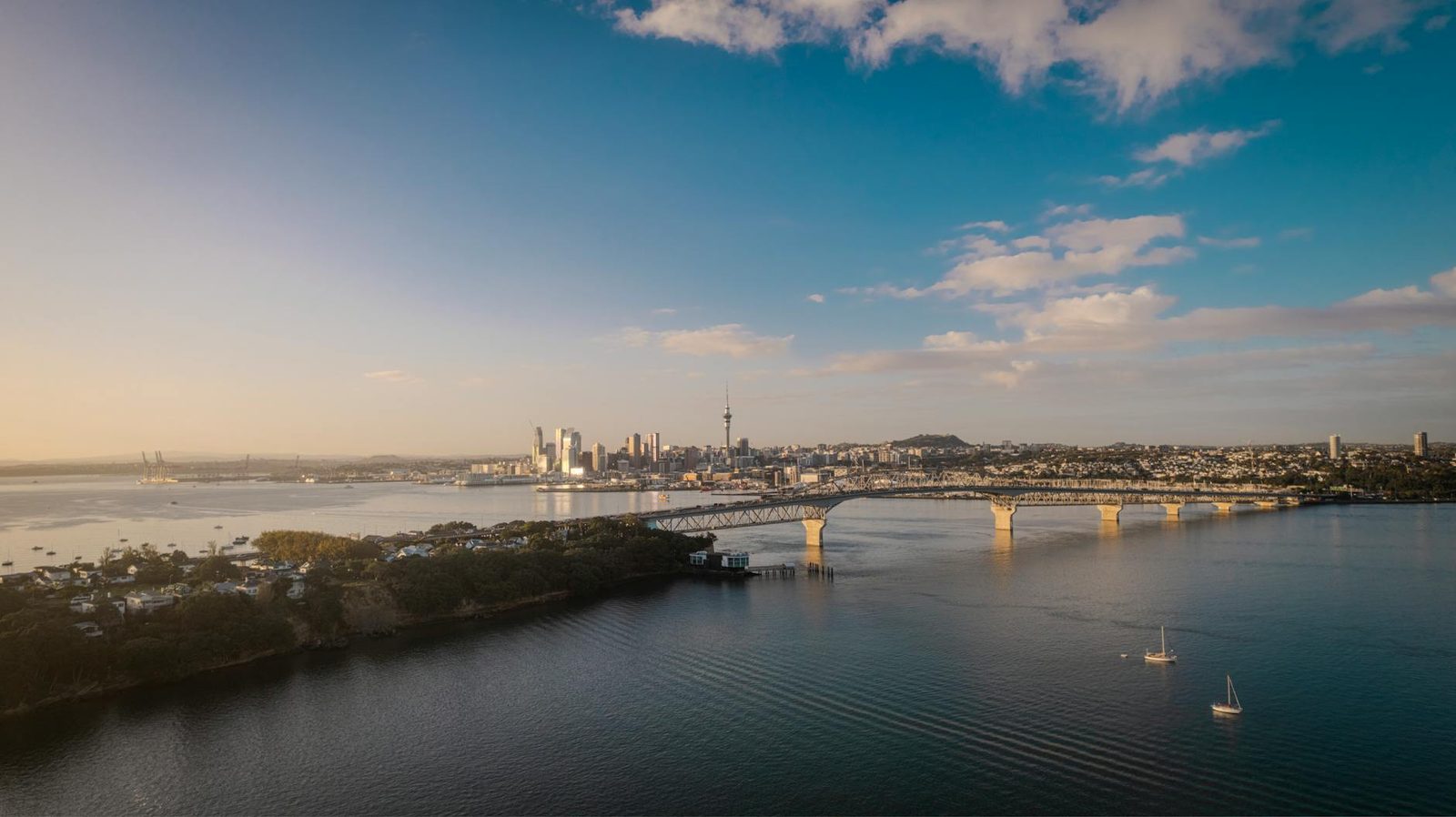
Auckland travel guide in 60 seconds
Auckland is best visited between late November and April, with December to March the prime summer window. Most first-time visitors spend 3 to 4 days in the city before heading to the rest of New Zealand, while those taking day trips to Waiheke, Hobbiton or the Bay of Islands should budget 5 to 7 days. Expect daily costs of roughly NZ$130 (budget), NZ$280 (mid-range) or NZ$550+ (luxury). The city is safe, English-speaking, and increasingly well-connected by public transport now that the City Rail Link has opened. You’ll want an AT HOP card (NZ$5), an NZeTA (if your passport requires one), and comfortable walking shoes — Auckland rewards travellers who explore on foot.
What this guide covers
- Why visit Auckland in 2026
- Best time to visit Auckland
- How many days do you need?
- How much a trip to Auckland costs
- Getting to Auckland & from the airport
- Getting around Auckland (with the new City Rail Link)
- 15 must-do Auckland experiences
- Best Auckland neighbourhoods to explore
- Food & drink: what and where to eat
- Top day trips from Auckland
- Māori culture, history & Tāmaki Makaurau
- Safety, health & emergencies
- Money, tipping & practical tips
- Sample itineraries: 2, 3, 5 and 7 days
- What to pack
- Auckland travel FAQs
Why visit Auckland in 2026
Auckland is often described as the “City of Sails” — there are more boats per capita here than in almost any other city on earth. But that nickname undersells the place. Auckland is built on 53 volcanic cones, sits between two harbours (Waitematā and Manukau) and is surrounded by the Hauraki Gulf, a marine park of 50-plus islands. You can spend the morning drinking flat whites in an inner-city laneway, catch a 40-minute ferry to a world-class wine region, and finish the day watching a sunset over native rainforest — all without leaving the greater Auckland region.
The city’s 1.7 million residents come from more than 220 ethnic backgrounds, which is why Auckland has the biggest Polynesian population of any city in the world and one of the most dynamic food scenes in the Pacific. It’s also the jumping-off point for most of the North Island’s headline experiences: Hobbiton, Rotorua, Waitomo Glow-worm Caves, the Bay of Islands and the Coromandel Peninsula are all within a day’s drive.
2026 is a particularly good year to visit. The City Rail Link — the biggest transport project in New Zealand’s history — opens to passengers in the second half of the year, adding two new underground stations (Te Waihorotiu in the midtown shopping district and Karanga-a-Hape on K’ Road) and cutting cross-city journeys to minutes. The waterfront regeneration around Wynyard Quarter continues to deliver new restaurants and public spaces, and a run of major summer events — from the ASB Classic tennis in January to Pasifika Festival in March and the Auckland Arts Festival in late summer — keeps the city humming.
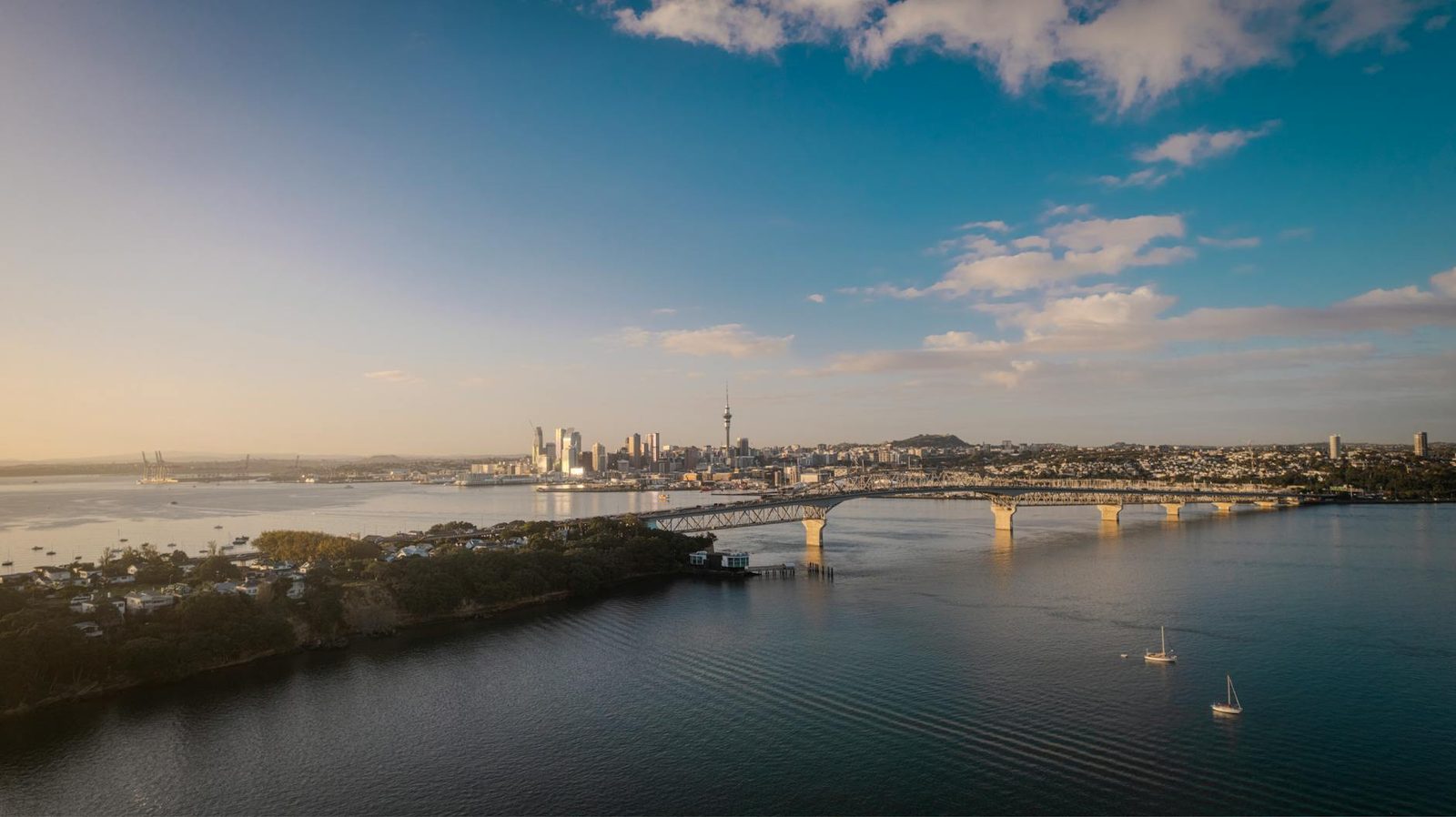
Best time to visit Auckland
Auckland has a mild, maritime climate — it rarely gets very hot, very cold, or very dry. That makes it a year-round destination, but the experience changes a lot depending on when you arrive.
Summer (December–February): peak season
Summer is Auckland at full volume. Average highs are 23–25°C (73–77°F), the sea is warm enough to swim, and every beach, island and rooftop bar is in use. It’s also school-holiday season (mid-December to late January), so expect higher accommodation prices, busy roads on Friday afternoons and packed ferries to Waiheke. Book hotels, Waiheke vineyards and Hobbiton tours weeks in advance. Upside: this is when Auckland’s outdoor personality shines brightest.
Autumn (March–May): the sweet spot
Many locals will tell you autumn is the best time to visit Auckland. Temperatures sit at a comfortable 18–22°C, the sea is still swimmable well into April, the summer crowds have thinned and prices dip. March is especially good — it overlaps with the Pasifika Festival (the largest Polynesian cultural festival in the world) and the Auckland Arts Festival, and it catches the tail end of wine-country harvest on Waiheke.
Winter (June–August): quiet and moody
Auckland winters are mild by world standards — average highs of 14–16°C (57–61°F) — but they are genuinely wet. Expect 8–14 rainy days a month. On the plus side, winter is cheapest for flights and hotels, museums and galleries are empty, and the Matariki (Māori New Year) celebrations in late June and early July are now a public holiday and one of the city’s most meaningful cultural events. Winter is also the best season for wine tasting on Waiheke (no crowds) and for seeing Auckland’s volcanic peaks in moody, cinematic light.
Spring (September–November): shoulder season bargains
Spring brings unpredictable weather (you can genuinely have four seasons in one day in Auckland) but also baby farm animals, pōhutukawa trees starting to bud, and October half-term crowds that are much smaller than summer. By late November, temperatures are climbing into the low 20s and the beaches are warming up — all without the summer price tag.
For a full month-by-month breakdown of weather, events, crowds and costs, see our detailed guide to the best time to visit Auckland and the companion Auckland weather year-round guide.
How many days do you need in Auckland?
The short answer: spend 3 days in Auckland if it’s part of a wider New Zealand trip, 5 days if Auckland is your main destination, and 7+ days if you want to combine the city with two or three regional day trips.
- 1–2 days — Enough for Sky Tower, the Auckland War Memorial Museum, a waterfront walk and dinner in Ponsonby. Tight.
- 3 days — Add a full day on Waiheke Island and a half-day exploring a volcano (Mount Eden or Rangitoto). This is the “minimum comfortable” stay.
- 5 days — Add a west-coast day (Piha and the Waitakere Ranges), plus Devonport by ferry for a morning.
- 7 days — Add Hobbiton and Waitomo Caves as a single long day trip, or an overnight in the Coromandel. You’ll also have time to repeat your favourite neighbourhood for a proper long lunch.
If you’re still weighing it up, our deep-dive on how many days to spend in Auckland breaks down sample schedules for every trip length, and Auckland vs Wellington vs Queenstown helps if you’re choosing a single North Island base.
How much does a trip to Auckland cost?
Auckland isn’t cheap by Southeast Asian or Eastern European standards, but it’s good value compared to Sydney, Tokyo or most European capitals. Below are realistic per-person daily budgets for 2026, based on actual 2026 prices (accommodation, transport, food, one paid activity per day).
| Travel style | Accommodation | Food | Transport | Activities | Daily total |
|---|---|---|---|---|---|
| Backpacker | NZ$45 (dorm) | NZ$35 | NZ$10 (AT HOP) | NZ$35 | NZ$125–140 |
| Mid-range | NZ$160 (3★ hotel / private room) | NZ$70 | NZ$15 | NZ$45 | NZ$270–300 |
| Upscale | NZ$350+ (4★/5★) | NZ$130 | NZ$25 + taxi/Uber | NZ$80–150 | NZ$550–700 |
A few price anchors to calibrate against: a flat white in a good café is NZ$5.50–6.50, a pint of craft beer is NZ$12–14, a sit-down restaurant main is NZ$28–42, Sky Tower entry is NZ$45, the Waiheke ferry return is NZ$63, and a Hobbiton guided tour from Auckland is NZ$120+ (transfers usually extra). Our complete Auckland travel budget guide breaks every line item down by category.
Getting to Auckland & from the airport
Flying into Auckland
Auckland Airport (AKL) is New Zealand’s busiest international gateway, with direct flights to most Australian cities, major Asian hubs (Singapore, Hong Kong, Tokyo, Shanghai, Seoul), the US west coast (Los Angeles, San Francisco, Houston, Chicago), Doha, Dubai, Vancouver and the Pacific Islands. It’s about 22km south of the city centre.
Airport to city: the 3 main options
- AirportLink bus + train — the cheapest public option at around NZ$10–12 with an AT HOP card. Runs every 10 minutes between 4:30am and 12:40am. Takes you to Puhinui Station, where you jump on a train into the CBD. Total travel time 55–70 minutes.
- SkyDrive shuttle — direct express coach to the CBD, roughly NZ$20 one-way, 45–55 minutes.
- Uber / Taxi — NZ$55–85 depending on time of day and traffic, 35–55 minutes. Easily the fastest if you’re travelling with luggage or a family.
AT HOP cards are sold from vending machines outside Door 4 of the domestic terminal and at Take Home Convenience in the international terminal — cost NZ$5, with a NZ$1 minimum top-up. If you’re only in Auckland a few days, contactless Visa/Mastercard now also works on buses, trains and ferries (though the HOP card is usually cheaper).
Getting around Auckland (including the new City Rail Link)
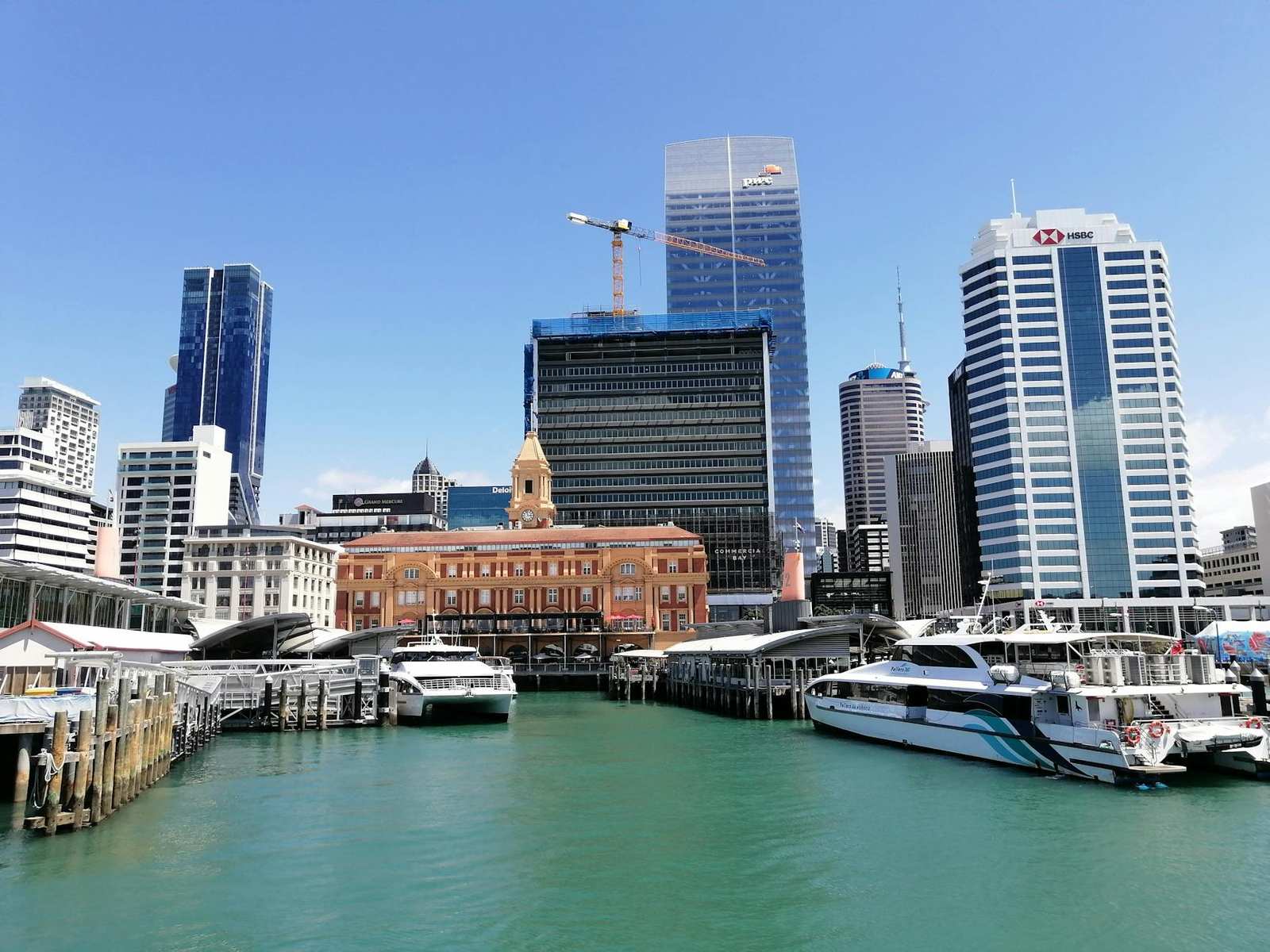
Auckland’s public transport network is run by Auckland Transport (AT) and has transformed in the last five years. With an AT HOP card you tag on and off buses, trains and ferries across the whole region, paying a single zone-based fare that tops out at around NZ$6.50 for the longest trips. Daily and weekly caps mean you won’t overspend.
The City Rail Link — Auckland’s biggest 2026 upgrade
The biggest single change in Auckland since the Harbour Bridge opened is the City Rail Link (CRL), a $5.5 billion underground rail project that opens to passengers in the second half of 2026. Two twin 3.45km tunnels connect Waitematā (Britomart) and Maungawhau (Mount Eden) stations via two brand-new underground stations: Te Waihorotiu (entrances on Victoria and Wellesley Streets, in the heart of the midtown shopping and theatre district) and Karanga-a-Hape (entrances on Mercury Lane and Beresford Square, serving K’ Road). Te Waihorotiu is expected to become New Zealand’s busiest train station. Practically, CRL turns the rail network from a one-entry city line into a frequent metro-style cross-town service, and it makes staying in midtown or K’ Road dramatically more practical.
Buses
The bus network is Auckland’s most comprehensive mode and connects areas the trains don’t. Frequent routes (labelled with blue “Frequent” branding) run every 15 minutes or better, 7am–7pm, seven days a week. The CityLink loop (NZ$1.20 with a HOP card) is a cheap way to move between Britomart, Queen Street, K’ Road and the Wynyard Quarter.
Ferries
Half the fun of Auckland is on the water. Regular passenger ferries connect downtown to Devonport (12 minutes), Waiheke Island (40 minutes), Rangitoto (25 minutes), Half Moon Bay and Gulf Harbour. Adult returns start around NZ$15 for the inner harbour. Sailings are frequent from 6am to about 11:30pm.
Trains
Auckland’s electric train network has four lines — Southern, Eastern, Onehunga and Western — all running through Britomart in the CBD. Once the City Rail Link opens fully, trains will run through-the-city rather than terminating, increasing peak-hour frequency dramatically. From early 2026, fares rose a modest 5.1% across the network.
Driving, cycling and rideshare
You don’t need a car to enjoy Auckland — in fact, it’s often a hindrance in the CBD, where parking is expensive (NZ$8–12/hour) and motorways clog at peak. Rent a car only for day trips west, north or into the Coromandel. Uber, Ola and Didi all operate. Cycling infrastructure keeps improving, with the Northwestern, Tāmaki Drive and SkyPath Harbour Bridge paths all highly rated. Our full Auckland transport guide breaks it all down.
15 must-do experiences in Auckland
This is our short list — the ones we recommend almost every visitor do at least once. For the full treatment, see our pillar on the best things to do in Auckland.
- Sky Tower observation deck and SkyWalk — At 328m, the Southern Hemisphere’s tallest freestanding structure. Visit at sunset for the double view: city in daylight, then lit up at night. Adrenaline option: the SkyWalk (harness-free guided walk on the outer ring) or the SkyJump base-jump.
- Waiheke Island day trip — A 40-minute ferry to a subtropical wine island with 20-plus cellar doors, olive groves, art galleries and beach restaurants. Go with a small-group wine tour or DIY by bus.
- Auckland War Memorial Museum — World-class collection of Māori and Pacific taonga (treasures), a live cultural performance including haka, and a moving WWI and WWII gallery.
- Maungawhau / Mount Eden — Auckland’s tallest volcano, an easy 20-minute hike to a 360° summit view with the crater at your feet. Sacred to Māori — stay on the paths.
- Rangitoto Island — A 25-minute ferry to Auckland’s youngest volcano (about 600 years old), with a two-hour walk to a summit crater through some of the largest pōhutukawa forest in the world.
- Viaduct & Wynyard Quarter — The restored waterfront — 1990s America’s Cup meets 2020s public space. Great for an evening stroll, casual dinner and people-watching.
- Ponsonby & K’ Road — Auckland’s creative, queer and hospitality heart. Saturday morning = brunch in Ponsonby; Friday night = live music on K’ Road.
- Auckland Art Gallery Toi o Tāmaki — Free entry to Oceania’s largest art collection, with a particularly strong contemporary Māori and Pacific programme.
- Devonport ferry — A 12-minute ride to a Victorian seaside village with two walkable volcanoes (Mount Victoria and North Head) and some of the best city-skyline photos going.
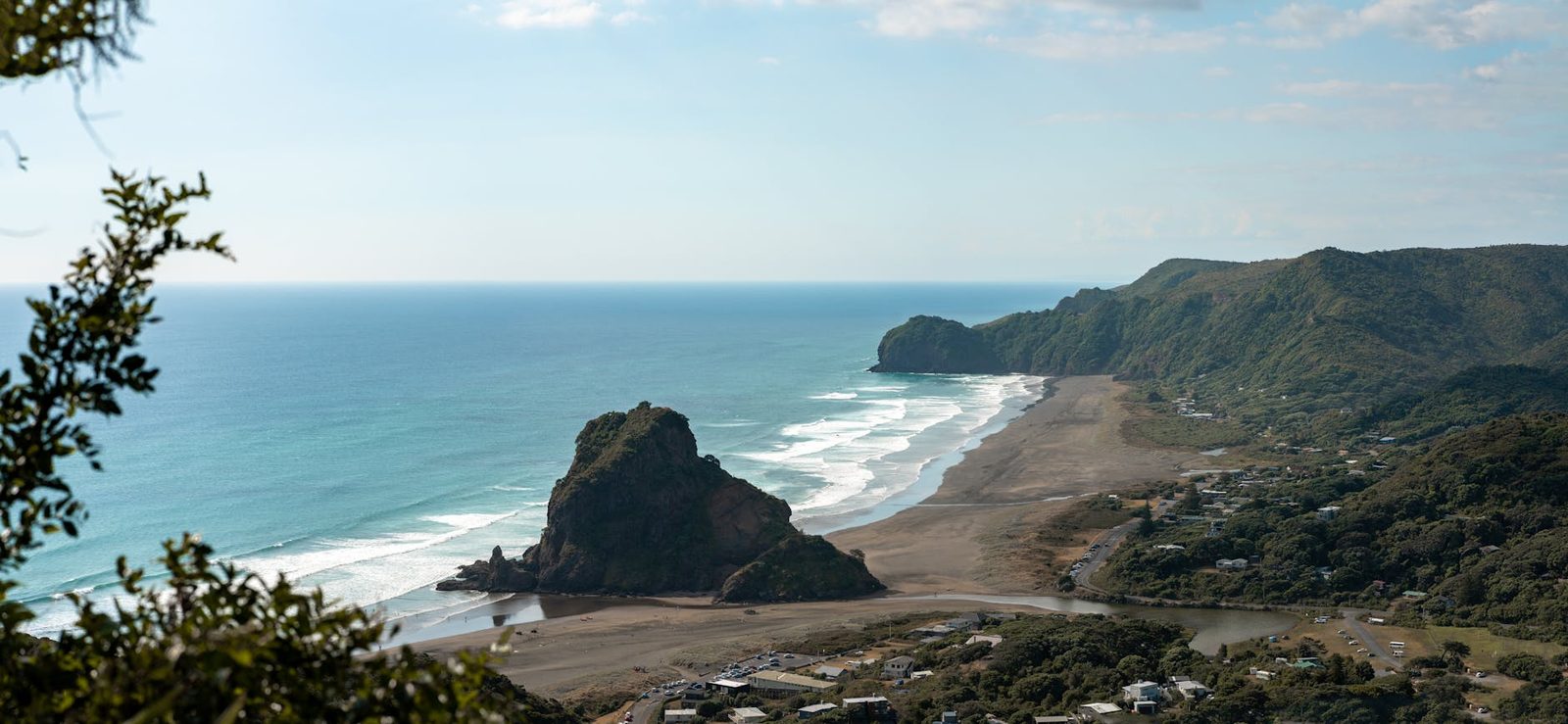
- Piha & the Waitakere Ranges — A one-hour drive west to wild, black-sand surf beaches, rainforest walks and Lion Rock. Go on a sunny day, take your swimmers, and be careful of rip currents.
- Auckland Zoo & MOTAT — Two strong half-days, one wildlife-focused, one transport-and-technology.
- Tāmaki Hikoi cultural walk — A small-group Māori-led walk around the volcanic landscape and Māori narrative of the CBD. Short, moving, highly recommended.
- Auckland Fish Market — Breakfast on the wharf, morning seafood shopping, then an evening cooking class overlooking the fishing fleet.
- Cornwall Park & One Tree Hill (Maungakiekie) — An urban farm with sheep, a Māori pā site and a 360° view, all within 10 minutes of the CBD.
- Auckland Harbour Bridge climb or bungy — Climb the 86m arch for a guided city panorama, or bungy-jump straight off it. One of the best adrenaline activities in the city.
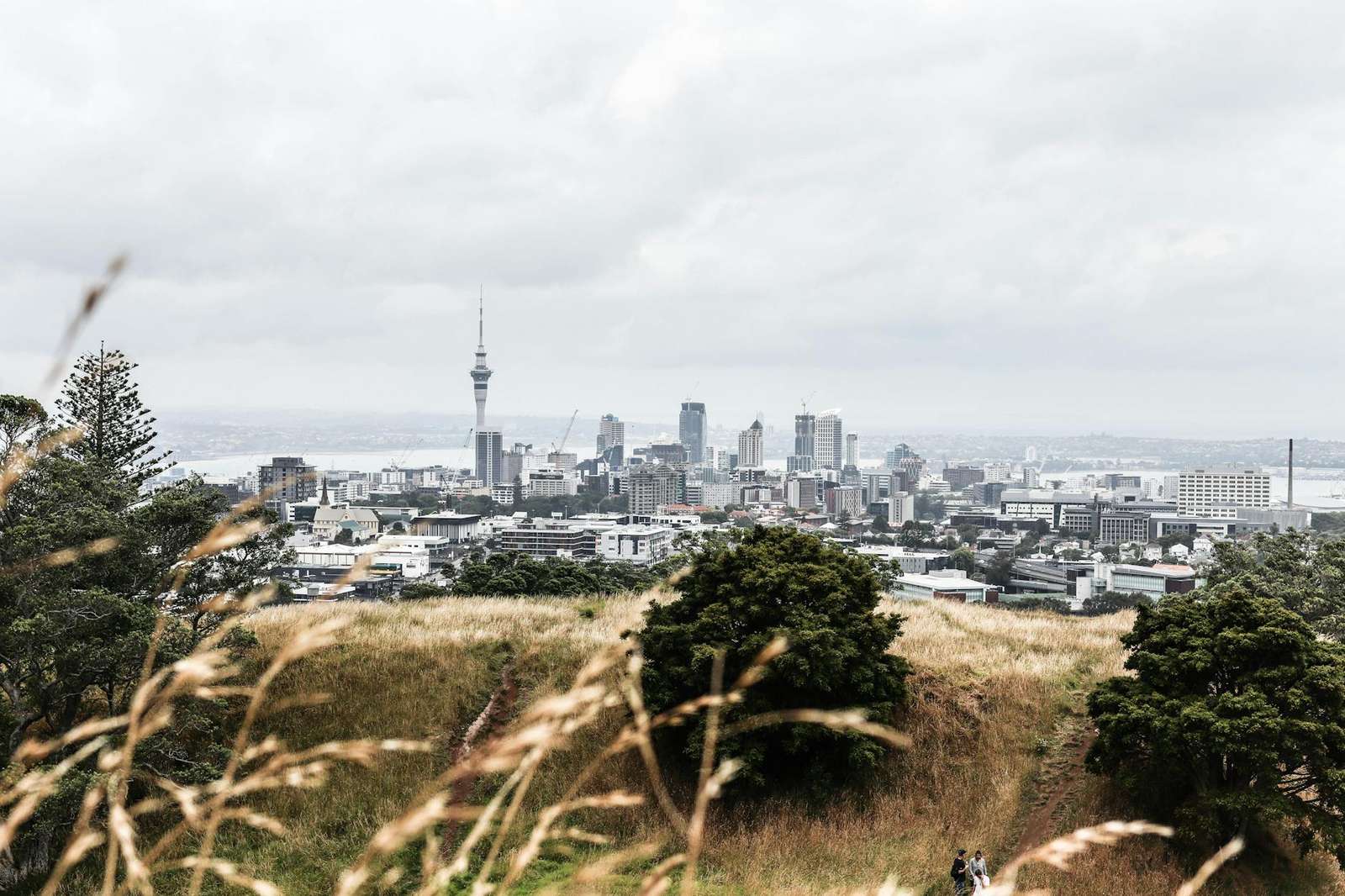
Best Auckland neighbourhoods to explore
Auckland’s character lives in its suburbs. Here are the eight most rewarding for visitors. Our complete Auckland neighbourhoods guide covers fifteen in depth.
- CBD / Britomart — The waterfront end of the centre. Transport hub, restaurant-dense, walkable to Sky Tower, Viaduct and ferries. Best base for first-timers.
- Ponsonby — Victorian villas, indie boutiques, first-rate restaurants and Ponsonby Central food hall. Brunch culture HQ.
- K’ Road (Karangahape Road) — Former red-light strip, now Auckland’s most eclectic strip: live-music venues, queer-friendly bars, record stores, Malaysian and Ethiopian hole-in-the-walls. Direct access from the new CRL station.
- Parnell — Auckland’s oldest suburb. Quiet tree-lined streets, boutique shopping, Parnell Rose Gardens, gateway to Auckland Domain and the museum.
- Mission Bay & Tāmaki Drive — A 15-minute bus from the CBD along the harbour to a genuine urban beach with gelato, fish & chips and views of Rangitoto.
- Devonport — Ferry-across-the-harbour village feel, Victorian architecture, two walk-up volcanoes, the Navy Museum and great seafood.
- North Shore beaches — Takapuna, Milford and Narrow Neck are locals’ favourite summer beaches, 20 minutes from the CBD by bus.
- Mount Eden village — Leafy, residential, with the Mount Eden summit walk, great brunch spots and easy train access to the new CRL network.
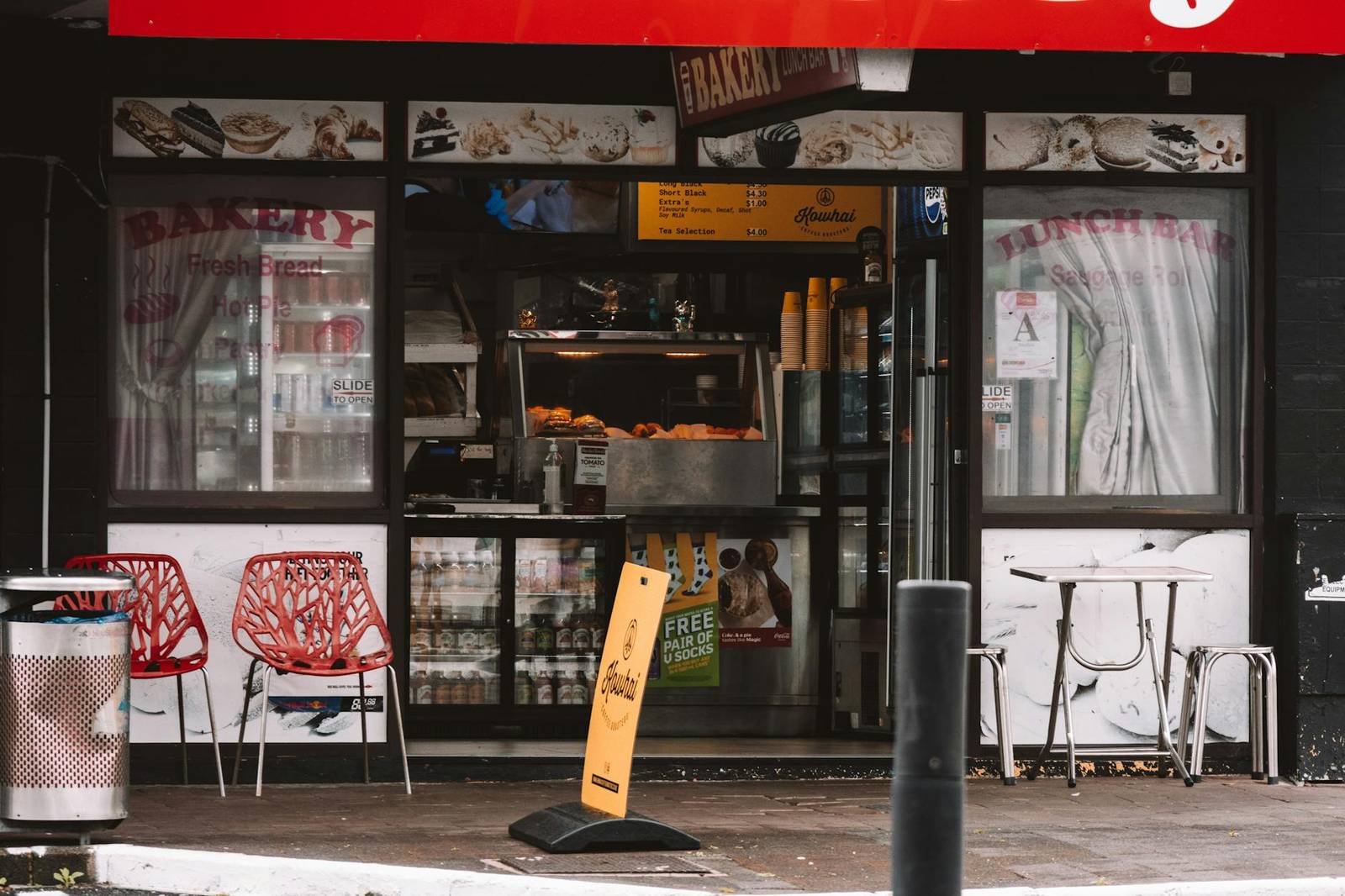
For where to actually sleep, see our pillar guide: Where to Stay in Auckland.
Auckland food & drink: what and where to eat
Auckland punches well above its weight for food. The combination of Pacific Rim produce, a huge Polynesian and Asian migrant population, and a coffee culture locals treat like religion means you’ll eat extremely well.
Dishes and drinks to try
- Flat white — New Zealand (and Australia) still argue over who invented it. Auckland baristas routinely place in world championships. NZ$5.50–6.50.
- Fish & chips — The coastal staple: snapper, trevally or tarakihi, fresh, in newspaper, eaten on a beach.
- Hāngī — Traditional Māori earth-oven feast, usually including pork, chicken, kūmara and cabbage, often served with a cultural performance.
- Green-lipped mussels — Large, endemic to NZ, cheap and spectacular with white wine and lemon.
- New Zealand wine — Marlborough Sauvignon Blanc and Central Otago Pinot Noir get the headlines, but Waiheke Syrah and Bordeaux-style reds are what locals drink.
- Pavlova, hokey pokey ice cream and L&P — The trifecta of Kiwi nostalgia desserts and soft drinks.
Food districts to target
- Britomart — Fine dining and modern bistros in restored 1900s warehouses.
- Ponsonby Central — A covered food hall with a dozen restaurants under one roof.
- Commercial Bay — The waterfront dining precinct inside the CBD retail complex.
- K’ Road — Cheap, multicultural, open late. Ramen, Malaysian, Ethiopian, vegan.
- Dominion Road — Auckland’s best Chinese and Taiwanese food, including two Michelin-recommended dumpling houses.
- Sandringham — South Indian and Sri Lankan capital of New Zealand.
- Wynyard Quarter — Waterfront seafood and wine bars with Harbour Bridge views.
See our full Auckland food & drink guide for named restaurants by budget and cuisine.
Top day trips from Auckland
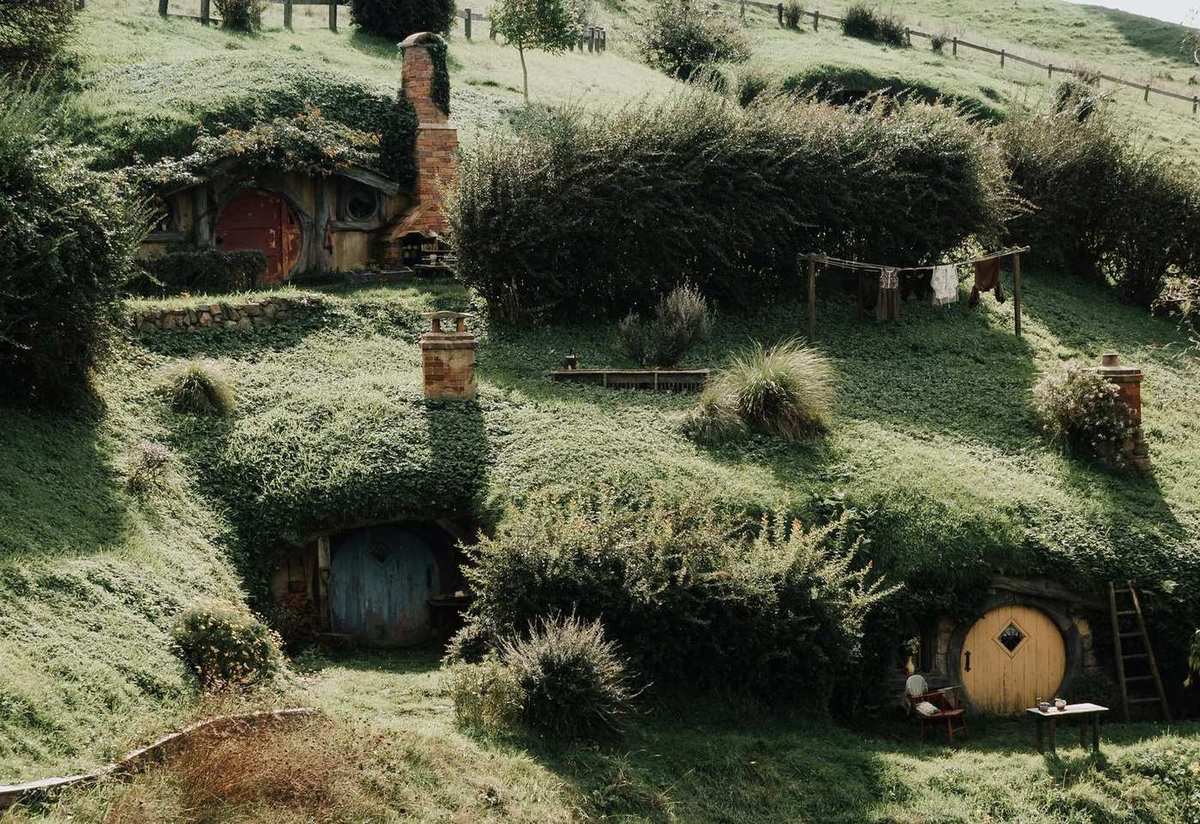
Auckland is the best base in New Zealand for day trips because so much of the country’s headline scenery is within 2–3 hours. Our short list:
- Waiheke Island — 40-minute ferry. Wine tasting, beach lunch, swimming. Easily done independently.
- Hobbiton Movie Set — 2 hours by coach. Guided tour of the Lord of the Rings shooting location. Book ahead; don’t drive — the pick-ups are well run.
- Waitomo Glow-worm Caves — 2 hours 20 minutes. Usually combined with Hobbiton as a big 12-hour day.
- Rotorua — 3 hours. Geothermal parks, Māori cultural evening, mud baths. Arguably worth an overnight.
- Bay of Islands (Paihia & Russell) — 3 hours 15 minutes. Best done as an overnight. Treaty of Waitangi grounds, Hole in the Rock boat trip.
- Coromandel Peninsula — 2 hours to Thames, then wind. Cathedral Cove, Hot Water Beach.
- Piha & Karekare — 45 minutes west. Black-sand surf beaches inside the Waitakere Ranges.
Our full 25 best day trips from Auckland guide compares drive times, prices and effort-to-reward ratios.
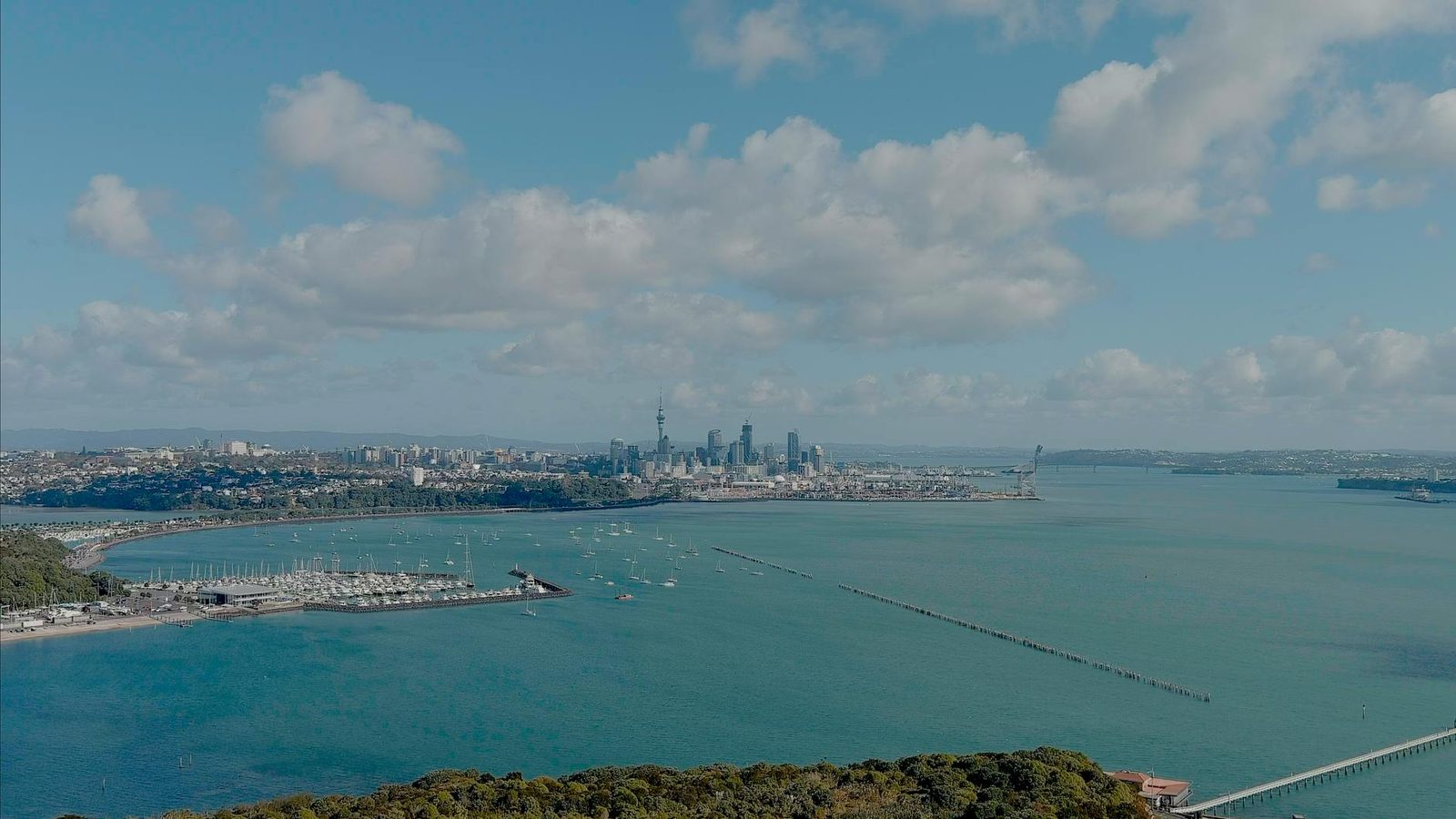
Māori culture, history & Tāmaki Makaurau
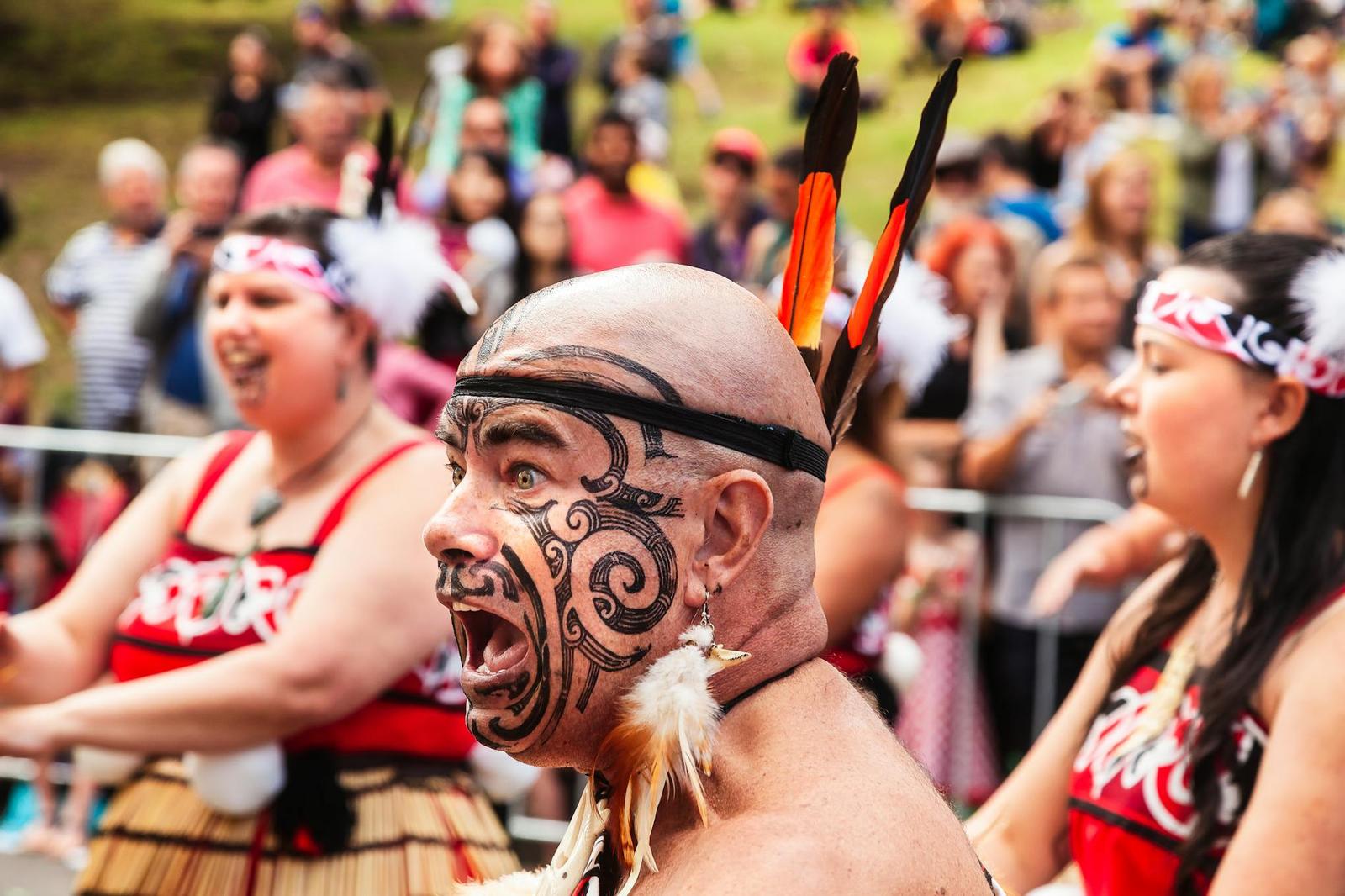
Auckland’s Māori name is Tāmaki Makaurau, which roughly translates as “the place desired by many” — a reference to the abundance of food, canoe portages, and strategic volcanic viewpoints that drew tribes to the isthmus from around 1350. The earliest settlers terraced the volcanic cones into fortified pā sites and cultivated 2,000 hectares of kūmara (sweet potato) gardens across the isthmus. By the early 1700s the dominant tribe was Te Waiohua; in the 1740s Ngāti Whātua-o-Kaipara moved south and took the isthmus. Today the region’s mana whenua (people of the land) are six iwi: Ngāti Whātua Ōrākei, Ngāti Pāoa, Ngāi Tai ki Tāmaki, Te Kawerau ā Maki, Ngāti Te Ata and Te Ākitai Waiohua.
That history is very present when you visit. The volcanoes you climb — Maungawhau, Maungakiekie, North Head — are all former pā. Tāmaki Hikoi walking tours, the Māori Court at Auckland Museum, and Matariki celebrations each winter are all excellent ways to engage. For the deep dive, see Auckland culture, history & Māori heritage.
Safety, health & emergencies
Auckland is a safe city by international standards. Violent crime against visitors is rare, and the city consistently ranks in the world’s top 10 on liveability and safety indices. That said, a few sensible precautions:
- Emergency number: 111 (police, fire, ambulance — 24/7, free from any phone).
- Non-emergency police: 105.
- Car break-ins around beach and hiking carparks are the most common property crime. Do not leave bags visible in cars, even briefly.
- K’ Road and parts of Fort Street get rowdy late on weekends — not unsafe, just noisy.
- Swim only between the flags at surf beaches (Piha, Muriwai, Bethells, Karekare). Rip currents are serious.
- Tap water is safe to drink everywhere.
- UV is intense — the sun here burns faster than in Europe or Asia, even on cloudy days.
For a thorough review, see Is Auckland safe for tourists?.
Money, tipping & practical tips
- Currency — New Zealand dollar (NZD). Roughly 0.60 USD or 0.55 EUR in 2026.
- Cards — Auckland is almost cashless. Contactless Visa, Mastercard and Apple/Google Pay are accepted almost everywhere. Tipping on card machines is increasingly common but not expected.
- ATMs — Widely available; withdraw NZD rather than paying in your home currency (avoid “dynamic currency conversion”).
- Tipping — Not expected. Round up at a café or tip 10% for genuinely exceptional restaurant service, but it is not part of the culture.
- Visa / NZeTA — Most US, UK, EU, Canadian, Japanese, Australian and other visa-waiver passport holders need an NZeTA (New Zealand Electronic Travel Authority) and must pay the NZ$100 International Visitor Conservation and Tourism Levy. Total cost roughly NZ$123, valid up to 2 years. Apply via the official NZ Immigration website at immigration.govt.nz. See our full NZeTA guide.
- SIM / eSIM — Prepaid SIMs from Spark, One NZ and 2degrees from about NZ$29 for 7 days with 15–25GB data. Airalo and Holafly eSIMs work well too. See our Auckland SIM & wifi guide.
- Plugs — New Zealand uses Type I plugs (same as Australia), 230V/50Hz.
- Time zone — NZDT (UTC+13) in summer, NZST (UTC+12) in winter.
- Driving — On the left. International licences valid for 12 months.
- Smoking / vaping — Banned in all indoor public spaces and many outdoor ones.
For a category-by-category breakdown, see Money in Auckland: currency, ATMs, cards & tipping and Tipping & etiquette in Auckland.
Sample Auckland itineraries
2 days in Auckland (stopover)
- Day 1 — Ferry to Devonport for breakfast; Auckland War Memorial Museum & Domain; late lunch in Ponsonby; sunset Sky Tower.
- Day 2 — Waiheke Island (vineyard lunch + beach swim); dinner in the Viaduct.
3 days in Auckland (recommended minimum)
- Day 1 — Walking tour of CBD, Sky Tower, Wynyard Quarter.
- Day 2 — Waiheke Island wine + beach day.
- Day 3 — Mount Eden sunrise, Auckland Museum, Ponsonby brunch, K’ Road evening.
5 days in Auckland (the comfortable city trip)
- Day 1 — CBD, Sky Tower, Viaduct dinner.
- Day 2 — Waiheke.
- Day 3 — Devonport morning, Auckland Museum afternoon.
- Day 4 — Piha and the Waitakere Ranges (day trip).
- Day 5 — Ponsonby brunch, Auckland Art Gallery, Mount Eden sunset.
7 days in Auckland + surrounds
- Days 1–3 — Auckland CBD, Waiheke, Mount Eden.
- Day 4 — Hobbiton + Waitomo (long day trip).
- Day 5 — Piha & Waitakere Ranges.
- Day 6 — Day trip or overnight in the Coromandel (Cathedral Cove, Hot Water Beach).
- Day 7 — Return to Auckland for Ponsonby brunch, Auckland Zoo or MOTAT, farewell dinner in Britomart.
Looking for a detailed hour-by-hour plan? See first time in Auckland: the complete guide.
What to pack for Auckland
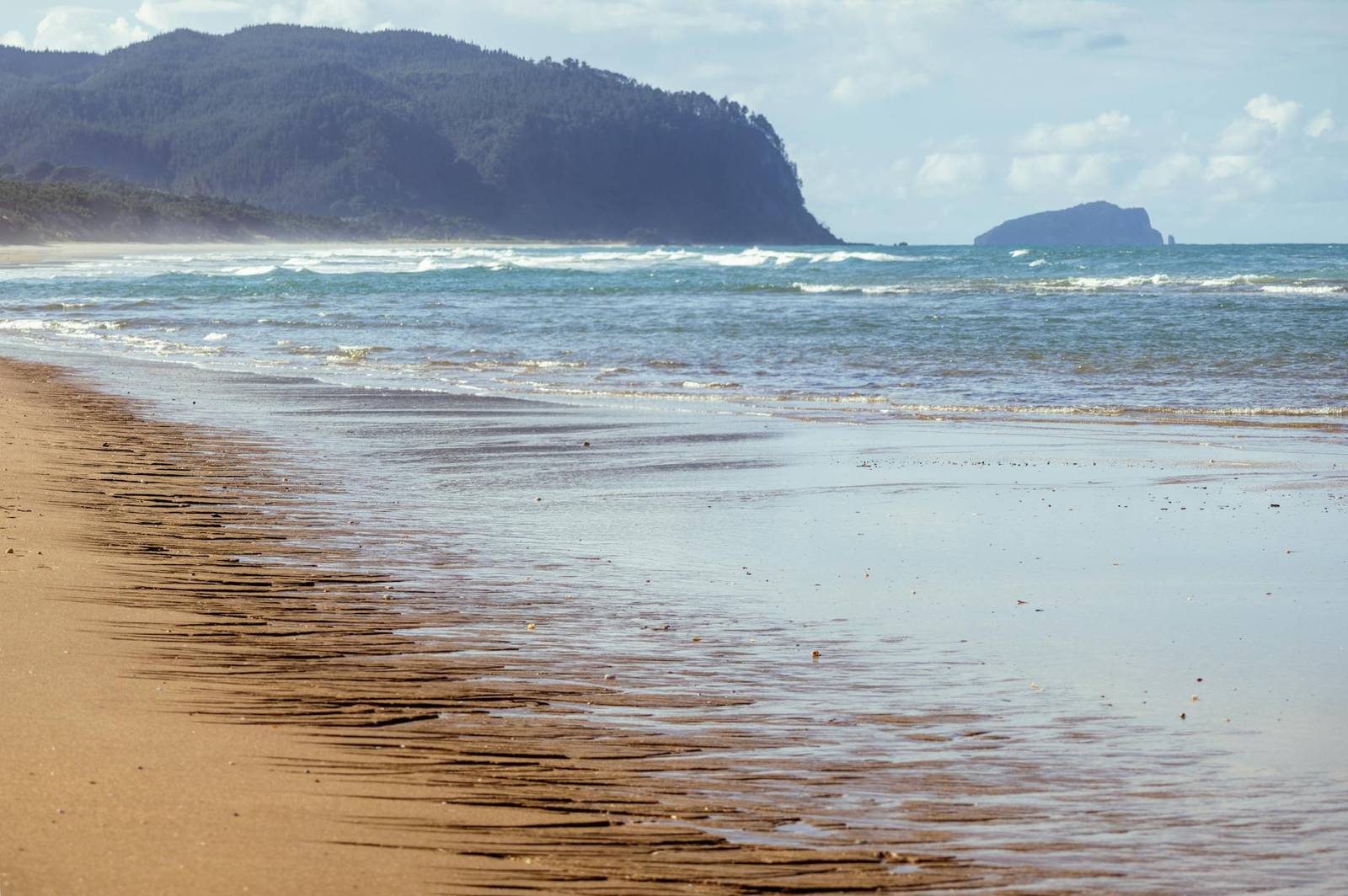
The single most useful Auckland packing rule: layers, always. Even in summer you can get 25°C at midday and 14°C and rainy by sunset. A light waterproof jacket earns its place in the suitcase year-round.
- Summer (Dec–Feb): light shirts, shorts, a light jumper for evenings, swimwear, reef-safe SPF 50+, a cap, walking shoes, rain jacket.
- Autumn (Mar–May): jeans, long sleeves, light jumper, waterproof jacket, swimsuit (for early autumn).
- Winter (Jun–Aug): warm mid-layer, waterproof jacket, umbrella, wool socks, closed shoes, thermal leggings for day hikes.
- Spring (Sep–Nov): mix of layers; add a jumper for evenings.
- Year-round: universal Type I plug adapter, refillable water bottle, reef-safe sunscreen, day pack.
See the full Auckland packing list by season.
Auckland events & seasonal highlights
Auckland is a festival city. Timing your trip to catch one of the headline annual events often doubles the experience, and many are free or low-cost. The calendar below covers the ones we think are worth organising a trip around.
- January — ASB Classic tennis. Two weeks of WTA and ATP tennis at Stanley Street, with more top-10 players than most tournaments its size.
- February — Splore and Laneway festivals. Splore is a three-day summer music and arts festival at Tapapakanga Regional Park (an hour south of Auckland). Laneway brings international indie acts to Western Springs.
- February — Lantern Festival. One of the Southern Hemisphere’s biggest Lunar New Year celebrations, free in Auckland Domain. Food stalls alone are worth the trip.
- March — Pasifika Festival. The world’s largest celebration of Pacific Island culture. Free, family-friendly, and one of the best events anywhere for food, music and dance.
- March — Auckland Arts Festival. Three weeks of theatre, dance, music and visual art across the city; many shows are free.
- May — Auckland Writers Festival. A top-tier literary festival; international headliners, packed sessions.
- June–July — Matariki. The Māori New Year, now a public holiday. Light installations, community gatherings, stargazing, and a quieter, more reflective season.
- October — Diwali. Auckland’s Indian community turns Aotea Square into a food, music and fireworks celebration across two days.
- November — Auckland Marathon and Farmers Santa Parade. The marathon runs across the Harbour Bridge (closed to cars). The Santa Parade on the last Sunday of November is a family institution.
- December — Auckland Anniversary Regatta (28 Dec / 1 Feb). Hundreds of yachts race in and out of the Waitematā Harbour; best watched from Mount Victoria in Devonport.
For the full year, see our Auckland events & festivals calendar.
Travelling to Auckland with kids
Auckland is one of the most family-friendly cities we cover. Most museums are free or low-cost, playgrounds are excellent, beaches within the Waitematā Harbour are calm and safe, and almost every major attraction has a family ticket. Auckland Zoo, MOTAT, Kelly Tarlton’s SEA LIFE Aquarium, the Wynyard Quarter’s giant playground, and Butterfly Creek are the big five for young kids. For tweens and teens, add the Sky Tower, Devonport ferry, bungy, and a Waiheke beach day. School-holiday programmes fill up quickly — book ahead if you’re visiting in late December or early January. See our full Auckland with kids family travel guide for age-specific recommendations.
Auckland travel guide FAQs
Is Auckland worth visiting?
Yes — for most travellers, Auckland is very much worth 3 to 5 days, especially if you want to combine city life (world-class food, multicultural neighbourhoods, a world-leading art museum) with easy-access nature: wine islands, rainforest, surf beaches and volcanoes, all inside a 60-minute drive. Travellers on very tight New Zealand itineraries who are chasing alpine or lake scenery sometimes skip Auckland. The rest of us would keep coming back.
What is the best month to visit Auckland?
March is our favourite single month: warm, dry, less crowded than peak summer, and it catches Pasifika Festival and wine-country harvest. February and late November are also very strong.
How safe is Auckland for tourists in 2026?
Very safe. Violent crime against visitors is rare; the main risks are car break-ins at beach/hiking carparks and dangerous swimming conditions at west-coast surf beaches. Emergency number is 111.
Do I need a visa to visit Auckland?
Most visitors on visa-waiver passports (US, UK, EU, Canada, Australia, Japan, Singapore, etc.) need an NZeTA plus the International Visitor Conservation and Tourism Levy — roughly NZ$123 total, valid up to 2 years. Apply through the official NZ Immigration site at least 72 hours before flying. See our NZeTA guide.
How do I get from Auckland Airport to the city?
The cheapest route is the AirportLink bus to Puhinui Station and a train into the CBD (NZ$10–12, ~65 minutes). SkyDrive express coach takes you directly to the CBD in about 45 minutes for around NZ$20. Uber or taxi costs NZ$55–85 and takes 35–55 minutes.
Do I need a car in Auckland?
Not for the city itself — public transport, Uber and walking handle it. Rent a car only for day trips west (Piha / Waitakere Ranges), north (Matakana, Goat Island) or east (Coromandel). Parking in the CBD is expensive (NZ$8–12/hour).
What is Auckland known for?
Auckland is known as the “City of Sails” for its dense boat ownership, its 53 dormant volcanoes, the Sky Tower, Waiheke Island wine, the world’s largest Polynesian population, its Māori heritage as Tāmaki Makaurau, and as New Zealand’s main gateway for international tourism.
What to read next
This guide is the home page of our Auckland travel guide cluster — 13 deeper articles that go section-by-section into everything above. We recommend reading next:
- Best Time to Visit Auckland: A Month-by-Month Guide
- How Many Days Do You Need in Auckland?
- How Much Does a Trip to Auckland Cost? (Full Budget Guide)
- Is Auckland Safe? A Tourist’s Safety Guide
- First Time in Auckland: A Beginner’s Travel Guide
- New Zealand Visa & NZeTA Guide for Auckland Travellers
Have questions we haven’t covered? Drop them in the comments below — we update this Auckland travel guide quarterly and answer every first-time-visitor question we get asked.
Image credits: Kwin M, Ollie Craig, Christopher Solly, Belle Co, Ben Mack, New Zealand, Robert Stokoe, Callie Kirkwood, Tyler Lastovich and Eclipse Chasers via Pexels. Sources: Auckland Transport, Auckland Council, New Zealand Immigration, Te Ara — the Encyclopedia of New Zealand, Tūpuna Maunga Authority.
Leave a Reply